
Walking Old Town’s historic streets, you’ll spot an unusual architectural form: houses with a single-sloped roof and a tall, windowless wall. These “flounder houses,” named for the asymmetrical fish, present a distinctive profile: blank on one side (although not always) and welcoming on the other.

In Alexandria, flounders often began as rear dwellings. Homeowners would start with this practical structure, building against property lines or neighboring buildings, while saving to construct a grander front portion. Thus, houses were often built in reverse, with the oldest part of the house in the rear and the newest part closest to the street. When I’ve asked about why the “flounder” house style is so prevalent in Old Town, I have been told (veracity unclear) that these tall, narrow buildings, cut in half the long way, may have satisfied early provisions requiring lots to be improved within certain timeframes. In reality, flounder houses may just be a good example of what happens when one builder solves a problem, and the solution gets copied and applied over and over again by others living in the same area. The single sloped roof of a flounder house design is easy to build, and it keeps rainwater off neighbors’ properties when building right up against property lines.
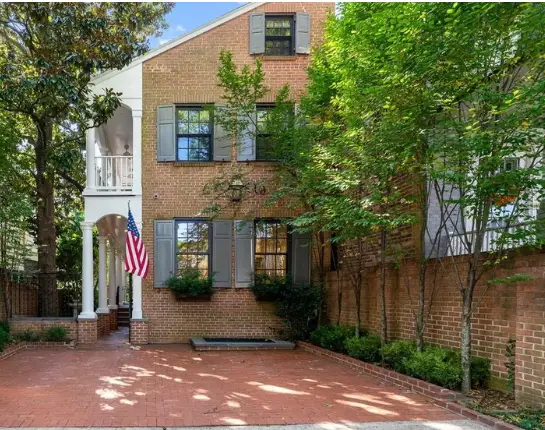
When restoring flounder houses today, we uncover more than craftsmanship – we find stories of families building their homes incrementally. What appears as a simple rear addition was often the original heart of the home. The exposed brick bonds and joinery reveal the ingenuity of early American builders working within urban constraints.
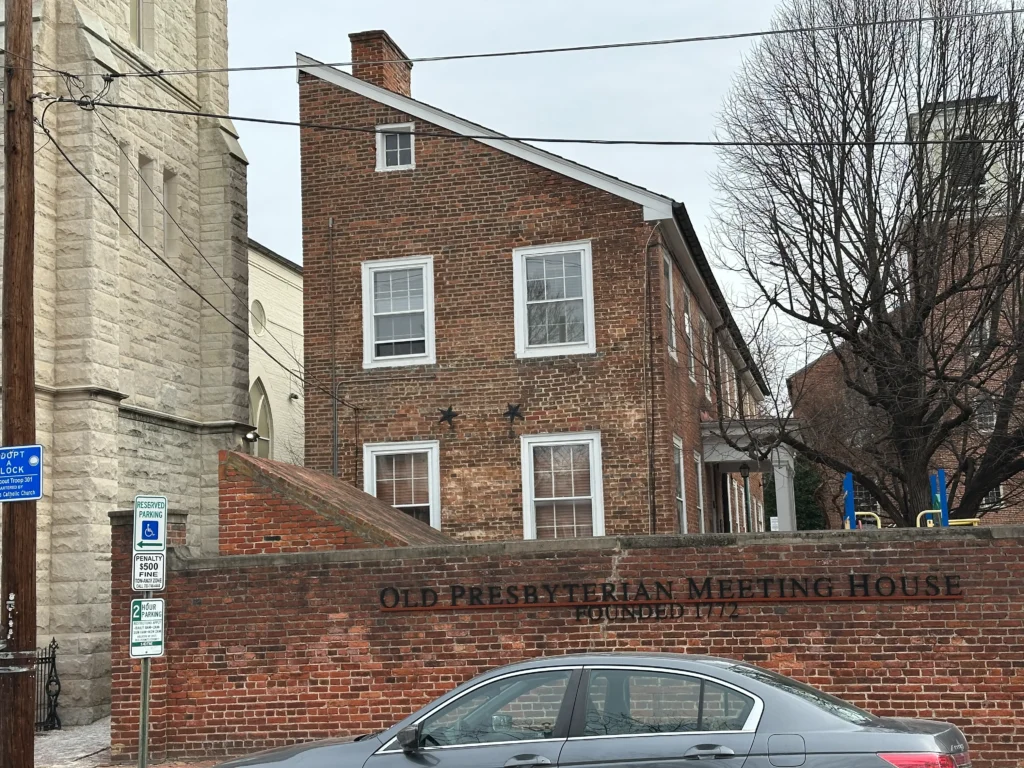
While similar shed-roofed houses exist from Boston to St. Louis, the term “flounder” appears unique to Alexandria. These practical solutions continue inspiring modern design, with architects and builders still incorporating the flounder style into Old Town projects. Its traditional proportions and distinctive roofline often win Board of Architectural Review approval, demonstrating how thoughtful design can emerge from practical constraints.
Sam Rust
—————————————————————————————————————————————————-
Learn more about Alexandria’s flounder houses at the Barrett Branch Library (717 Queen Street) or the Office of Historic Alexandria.