

Brick construction is everywhere in the Washington, DC region. Walk almost any block in Old Town Alexandria and you’re surrounded by it. That proliferation is a story in wealth, design aesthetic, and local resources. A home built of solid brick or stone walls was built to stand the test of time. It was also a signifier of refinement, quality, and expense. So much so that George Washington built his wood-frame home at Mount Vernon with a false stone façade using a technique called “rustication.” He wanted a house that looked like stone even if he couldn’t afford it.
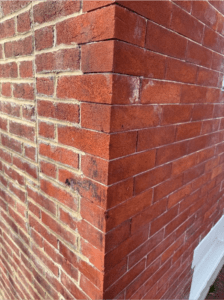
In Old Town and nearby, that desire produced a coherent masonry tradition that dates to colonial days and remains integral to the architectural character of the city. The Board of Architectural Review overseeing the Old Town Old and Historic and Parker-Gray Districts maintains specific guidelines for how brick and mortar buildings are repaired and altered. The mortar matters as much as the brick, sometimes more.
In the 1700s and early 1800s, Alexandria’s buildings were constructed with red brick made from local clay, laid with mortar made from local sand, water, and lime. These early bricks were hand-pressed and soft, irregular in size and color, with a porous surface that absorbs and releases moisture as the building breathes. By the mid-1800s, machine manufacturing produced harder, more uniform brick. Color and shape became more consistent. Builders began experimenting with different sizes and finishes. By around 1920, modern hard-fired brick became standard.
It’s also worth knowing that in most periods, builders used their best brick on the front facade and cheaper, more common brick on the sides and rear and even foundations. If you’ve ever noticed that the back of an old Alexandria rowhouse looks noticeably different from the front, that’s why.
Modern mortar is bad for old bricks
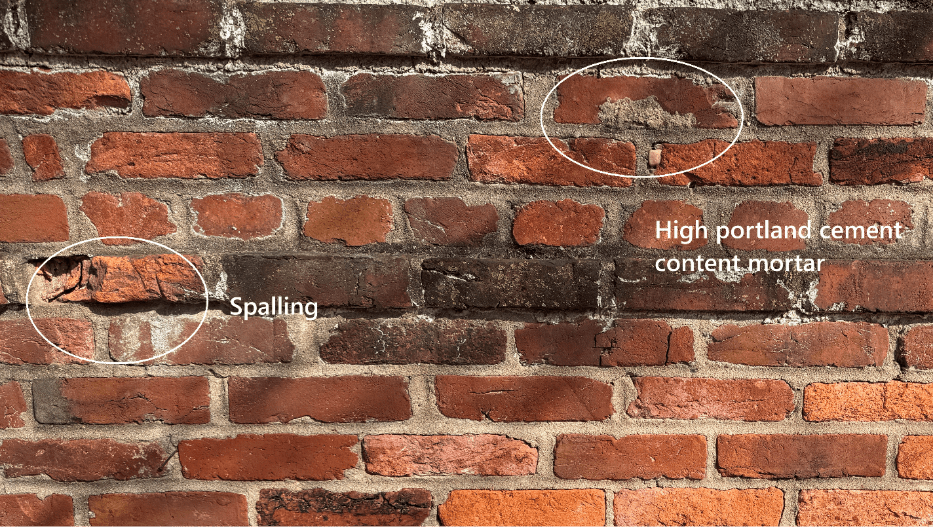
Mortar selection is where most well-intentioned repairs go wrong. Original, historic mortar was lime-based, which was soft, flexible, and porous by design. In a masonry wall, the mortar is meant to be the sacrificial element. It absorbs movement, moisture, and the stress of seasonal expansion so the bricks don’t have to. Well-maintained historic masonry typically only needs repointing every 75 to 100 years. Modern homes are built with hard bricks and portland cement mortar, which is harder and more rigid than lime-based mortar. When the mortar is harder than the brick (as is the case with cement-based mortar used with historic bricks) any movement in the wall gets absorbed by the brick instead. The result is spalling where the face of the brick breaks off in pieces. Once this happens, the damage is permanent. The BAR guidelines are direct on this point: using the wrong mortar is “considered a form of demolition.”
What is mortar?
Mortar is made from four basic ingredients: sand, lime, water, and in modern mixes, portland cement. Sand is the largest component by volume. The qualities of the sand used define the color, texture, and cohesiveness of the finished joint. Historically, masons used local sand, which is why the mortar on a 250-year-old Alexandria building often has a distinctive warm tone. Lime acts as the binder. Its proportion in the mix determines how hard, flexible, and permeable the cured mortar will be.
Before portland cement became common in the early 20th century, lime was prepared on site. Quicklime (limestone burned at high heat) was combined with water in a process that caused the mixture to boil and expand into a wet putty. That putty was left to mature for up to a year before being mixed with sand and applied. The result was a mortar that was exceptionally workable and forgiving. Modern hydrated lime comes in bags and is a practical substitute, but it behaves differently than traditional lime putty. Matching historic mortar is more art than formula, and experienced masons know it.
Type of Mortars
The ratio of ingredients is what determines mortar type. More lime means softer and more permeable. More portland cement means harder and more rigid. Getting that ratio right for the brick you’re working with is the whole game.
The Alexandria BAR specifies mortar types L, O, and K depending on location and exposure for building built before 1932. Each mortar type has a different ratio of lime to other ingredients, and the right choice depends on where in the wall the mortar is being applied and how much exposure it sees.
Type K (75 psi) has 1:3:10 (cement: lime: sand) ratio. It is used on the most delicate historic masonry such as the minimally durable brick common in 18th and early 19th century construction. It offers maximum flexibility and breathability, which is what fragile old brick needs.
Type O (350 psi) has a 1:2:9 (cement: lime: sand) ratio is a step up in strength from K type mortar. Type O mortar is appropriate for moderately durable masonry such as molded brick, limestone or interior non-load bearing walls. It still contains a high proportion of lime and remains well below the hardness of mortars with higher portland cement ratios, but is harder than L and K mortars.
Type L (Lime Mortar) has a 1:3 lime to sand ratio with no portland cement in it. This makes it the softest and most flexible of the lime-based mortar options. This mortar is used on the oldest structures with the softest bricks, where high mortar permeability and movement are needed. As of this writing (4/25/26), the BAR guidelines on the Alexandria City website state that type L mortar is more durable than O and K type mortars, but we believe that this is a mistake.
“Modern” Mortars
Type N (750 psi) contains a 1:1:6 (cement: lime: sand) ratio. It is appropriate for the harder, machine-made brick of the 20th century, where the brick can tolerate a stiffer mortar without risk of damage. Experienced masons will often use a ratio of Type N mixed with bagged lime to better approximate older mortars with the benefits of cement’s compressive strength. It’s important to understand why this is being done and what the implications are.
Type S (1,800 psi) has a 1:½ :4 ½ (cement: lime: sand) ratio is good for load bearing walls with high wind resistance. This mortar can be repointed.
Type M (2,500 psi) has a 1:¼ :3 ¾ (cement: lime: sand) ratio and is the least flexible mortar. It is also really hard to repoint because of the high cement content.
Mortar repair is “repointing”
Over time mortar joints degrade and fall out. Eventually they need to be repaired with a process called “repointing.” Masons carefully remove the deteriorated mortar and replacing it with new mortar matched to the original in composition, color, texture, and joint profile. The term “tuckpointing” is also used but this technically describes a decorative finishing technique where a thin line of lime putty is applied on top of a flush mortar joint to create a fine, precise look. The two terms are sometimes used interchangeably, but when we’re talking about repairing failed mortar, “repointing” is the right word.
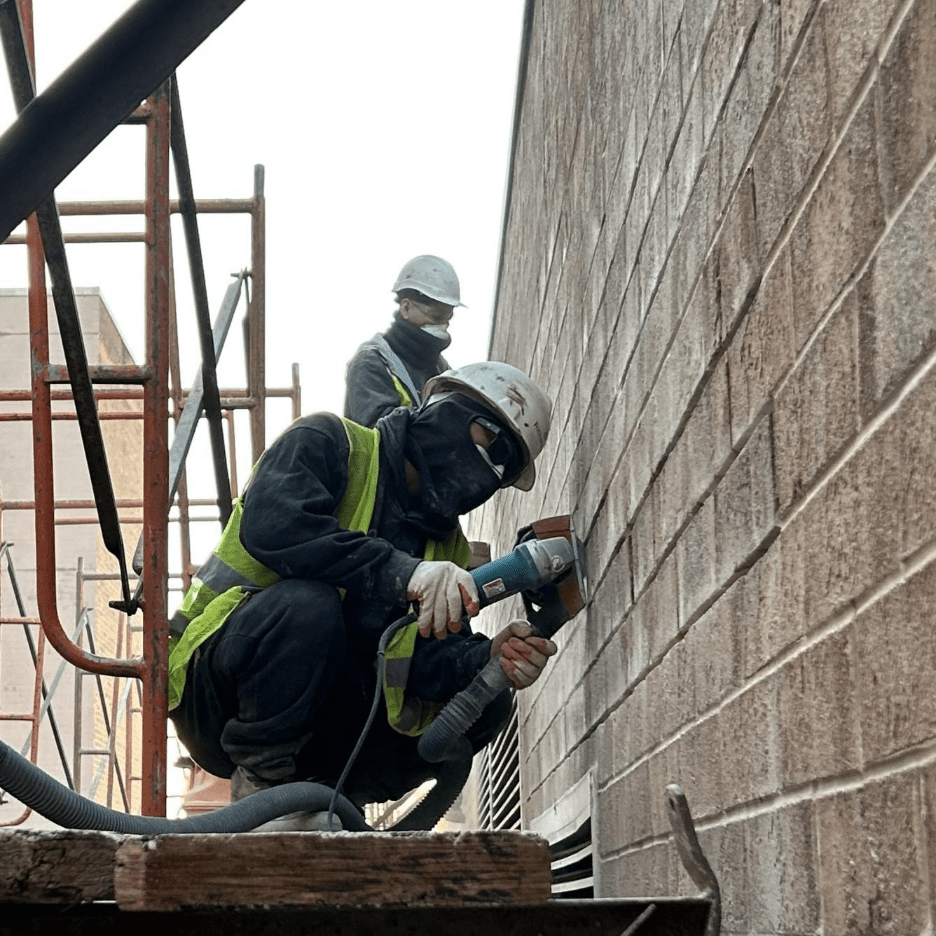
Getting repointing right requires knowing what you’re working with. The mortar mix, the joint profile, the removal technique all matter. Power tools used carelessly on historic joints can slice into the brick face, widening joints and exposing the softer interior of the brick to weathering.
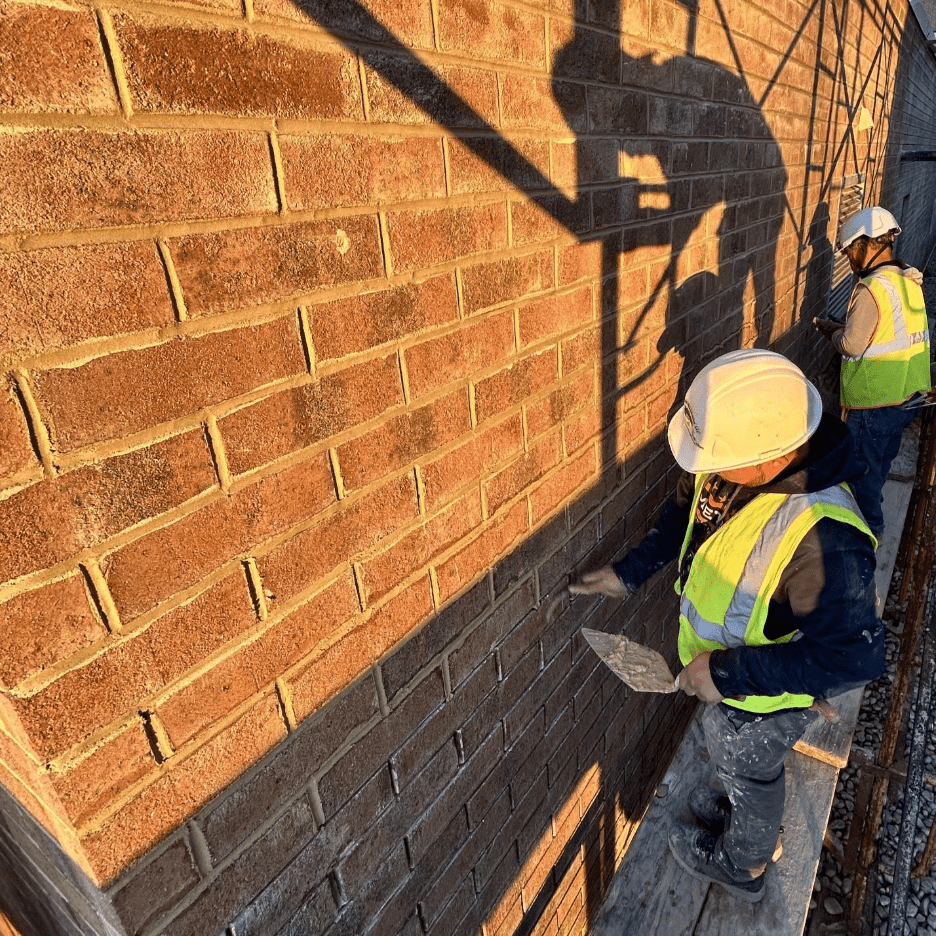
Before any repointing begins, new mortar should be tested in a small sample area. The BAR requires this before any approved work proceeds. Here is an informative brief from National Park Service on repointing mortar joints.
If your home was built before the 1930s and someone has repointed it with portland cement mortar it may be worth having a good mason assess it. The damage may already be visible in spalling brick faces or mortar joints that look newer and grayer than the surrounding wall. It may not be visible yet but still be accelerating deterioration. Either way, it’s better to know.
The masonry on Alexandria’s oldest homes was built to last. With the right materials and the right masons, it still will.
At Rust Construction we have craftsman on staff with masonry experience and will take on small masonry repair jobs as part of larger remodeling projects. However, we work with highly qualified masonry companies for most restoration projects. Masonry companies we have worked with in the past are:
– Sam Rust
Other useful links:
National Park Service Pamphlet – Robert C Mack and John P Speweik: Repointing mortar joints in history masonry buildings
This is the second in a series on historic masonry. Next: how to read bond patterns and joint profiles on your own facade and what they tell you about when and how your home was built.