
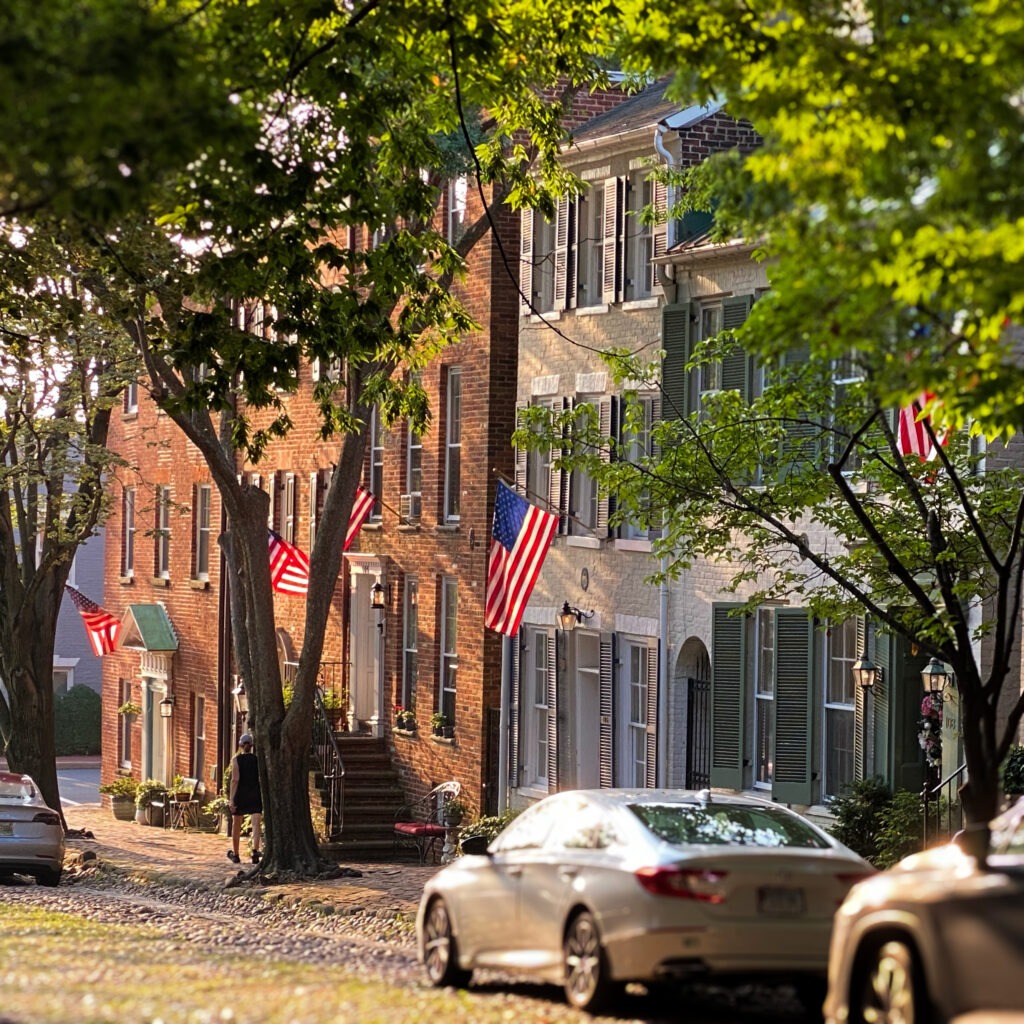
Walk Old Town’s historic streets long enough, and you start to notice things. A fanlight over a front door. A deep cornice with decorative brackets. A bay window projecting from an otherwise flat façade. One house feels formal while another feels more expressive.
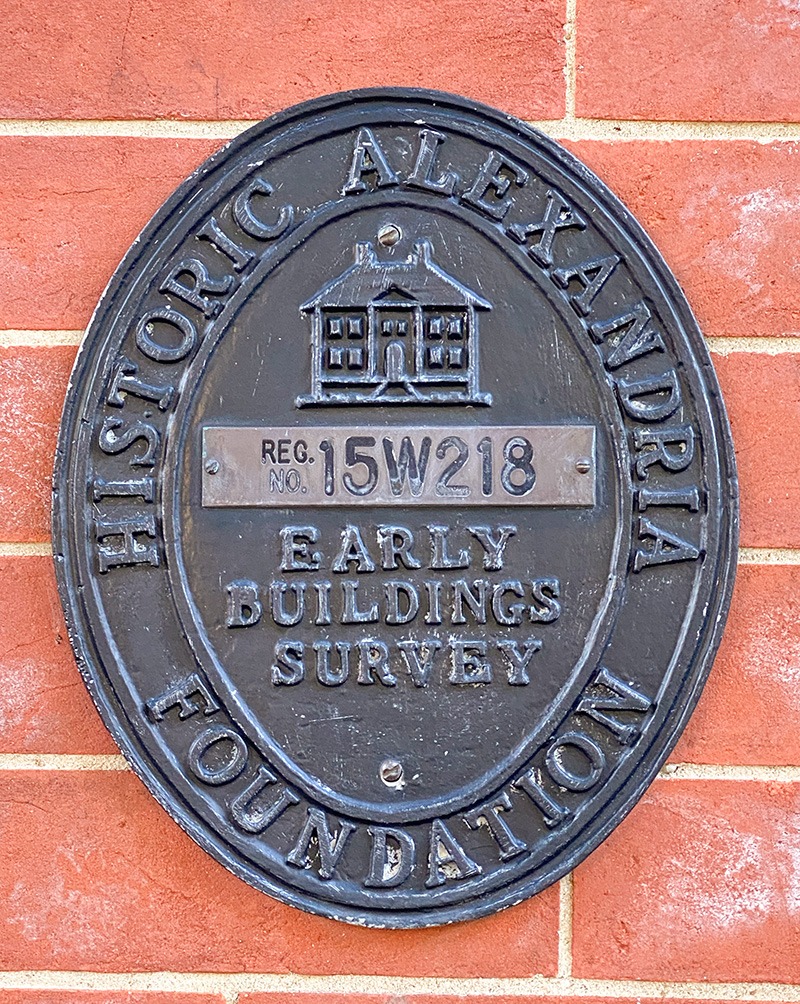
Most of what you’re seeing has roots in the mid-eighteenth century, when Alexandria was first laid out and its earliest homes were built. The styles that emerged from that period, and evolved through the nineteenth century, still define the neighborhood today. Alexandria has one of the longest histories of historic preservation in the country. That commitment is a big part of why so much of the original fabric survives.
Here are the main styles you’ll encounter in Old Town, along with a few local forms that don’t fit neatly into any category.
Buildings in Alexandria’s Old Town and Parker Gray Historic Districts are subject to oversight by the City’s Board of Architectural Review (BAR). Exterior projects visible from public spaces must go through either an administrative or formal hearing process.
Alexandria is especially known for its concentration of early Georgian and Federal architecture, which is part of what gives the neighborhood its distinctive character.
Georgian (1700s to mid-1800s)
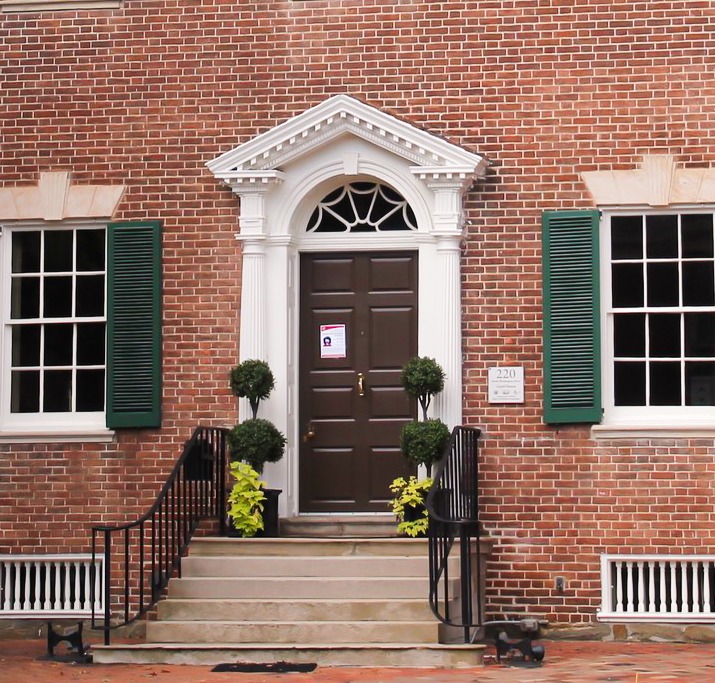
Georgian homes are some of the earliest and most formal houses in Old Town. They tend to feel grounded and orderly, with solid brick façades, balanced proportions, and strong entry compositions. The detailing is often substantial rather than delicate, which gives these homes a sense of permanence.
The Lloyd House on Washington Street remains one of the best-known examples of late eighteenth-century Georgian design in Alexandria.
Federal (1700s to mid-1800s)
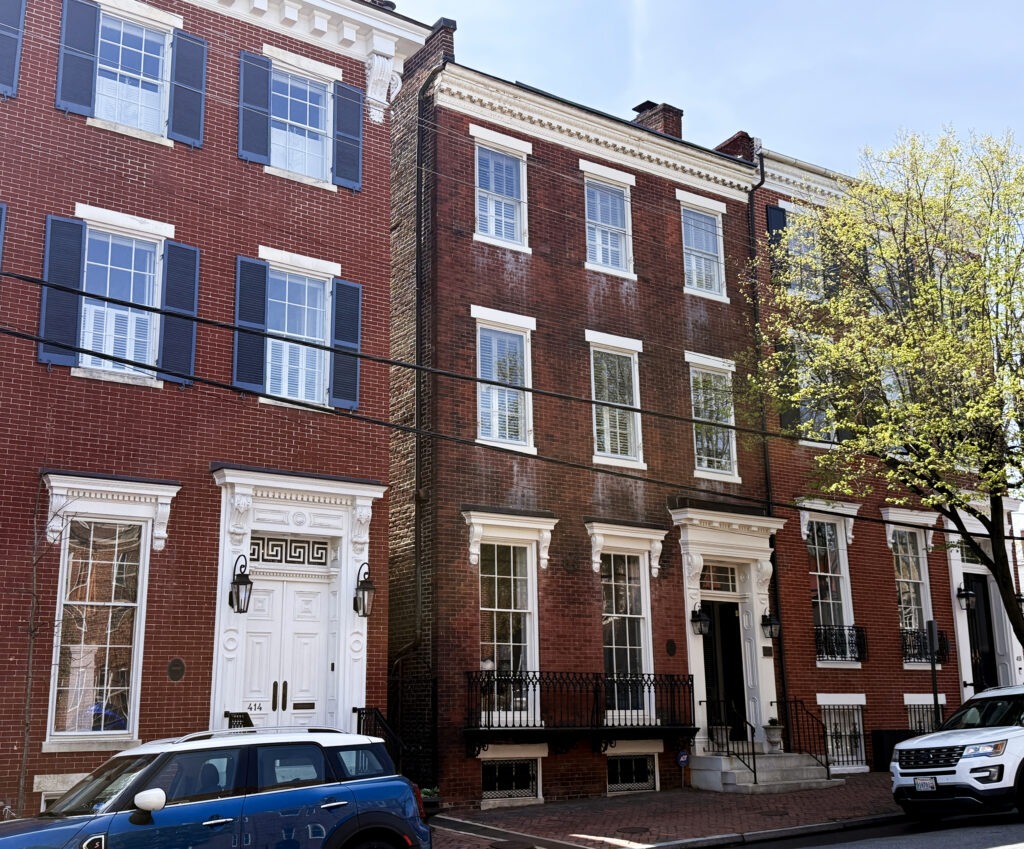
Federal style built on the symmetry of Georgian architecture but introduced a lighter, more refined touch. In Old Town, Federal homes often stand out for their fanlights, slender trim, arched openings, elegant proportions, and thin brick mortar joints.
Greek Revival
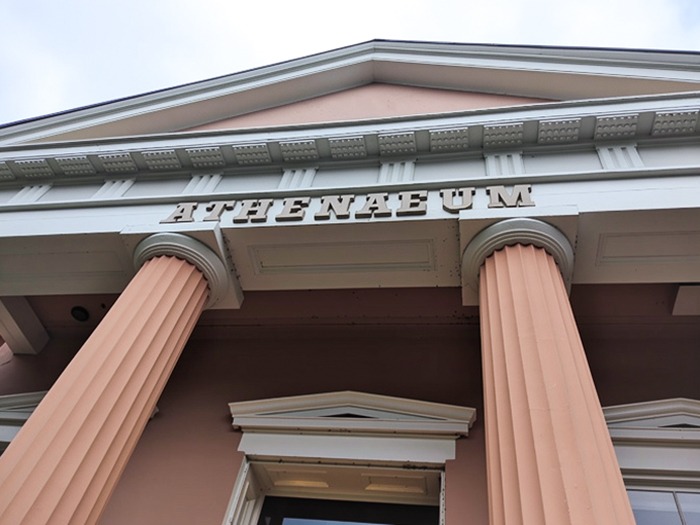
Greek Revival is less common in Old Town, but the style shows up on some of its most prominent buildings. Where it appears, it tends to feel more monumental. Stronger classical references, bolder presence than the Georgian and Federal houses around it.
The Lyceum and the Athenaeum are two of Alexandria’s best-known examples and help illustrate how this influence became part of the city’s architectural mix..
*Fun fact, our records show us that Rust Construction renovated the Athenaeum multiple times back in the 1980s.
Italianate and Victorian Influences (mid to late 1800s)
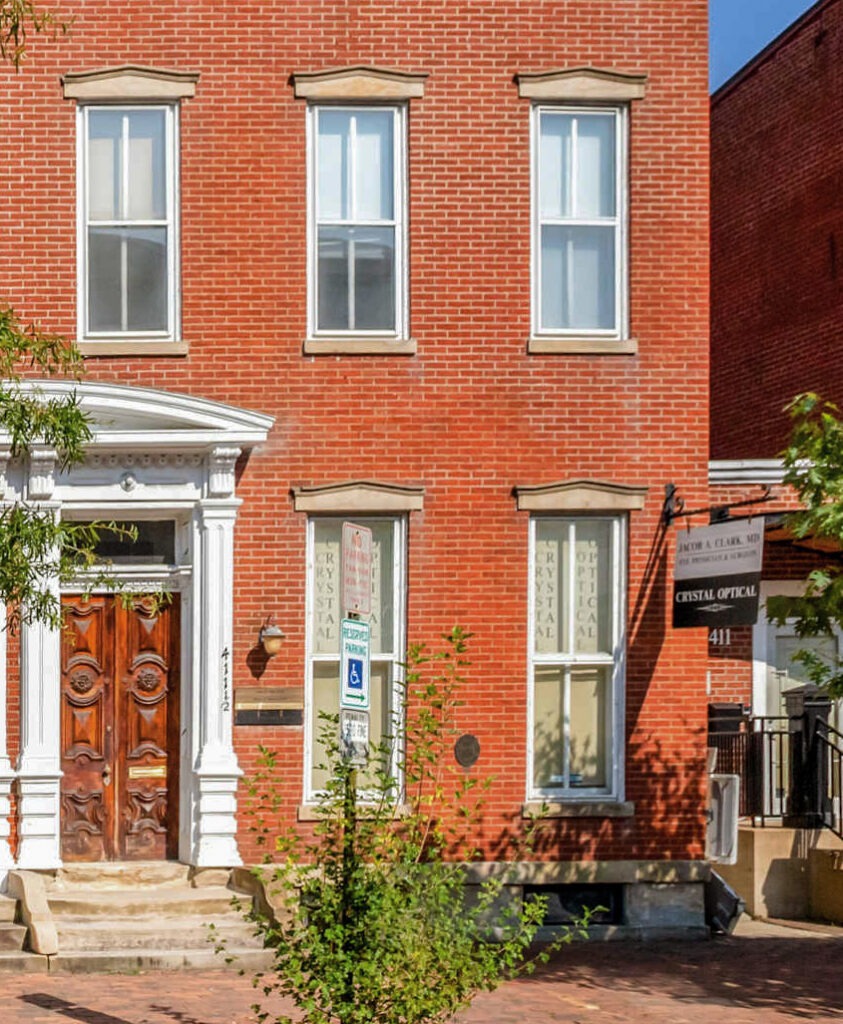
By the mid-to-late nineteenth century, Alexandria’s streetscape began to include homes with more ornament, vertical emphasis, and visual variety. Italianate buildings introduced taller proportions, deeper cornices, decorative brackets, and tall narrow windows. Later Victorian influences, including Queen Anne, brought more asymmetry, bay projections, textured surfaces, and decorative trim.
Compared to their Georgian or Federal neighbors, these homes are more expressive and less restrained.
Swann-Daingerfield: Architectural Style Is Not Dogma
One of our favorite projects is the Swann Daingerfield house. Built in 1802 as a Federal style house, it was renovated again in 1832 with a Greek Revival wing and then again in the 1870s with a Second Empire mansard roof and other details such as arched dormers and arcaded front porch. Later the home was further expanded into a school and hospital with additional wings. Today the property is a condominium with the original home comprising one of the units. Rust Construction fully renovated the original portion of the home in the mid-2010s and has renovated other portions of the building at other times.
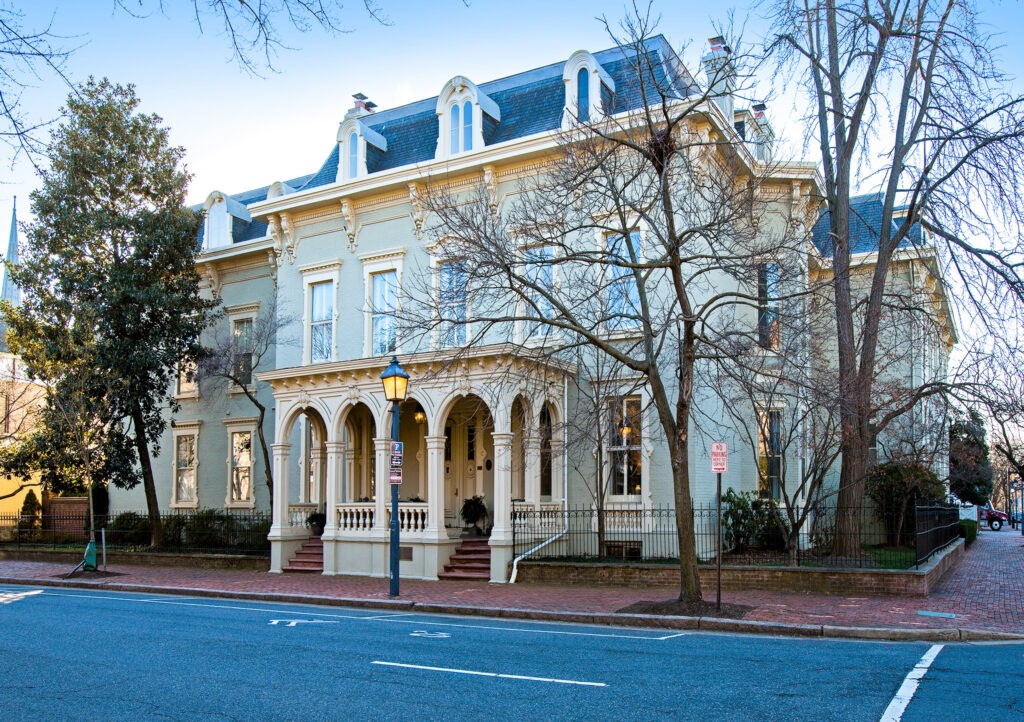
The preservation of Old Town’s architectural history is essential to its character. So is the fact that it has always evolved and will continue to do so.
“Folk” Houses
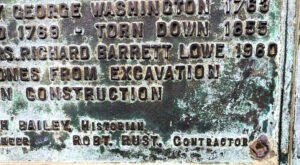
Many (maybe the majority) of the early houses in Old Town don’t fall into a specific architectural category. They were built by and for ordinary people, without a particular style in mind, just built to fit the neighborhood. Most of these are wood frame townhomes with shared walls and minimal to no foundation. Others were colonial era simple standalone buildings like George Washington’s townhouse on 508 Cameron St which was rebuild by Rust Construction in the 1960s. These houses form the fabric between Old Town’s grander buildings and are just as interesting.
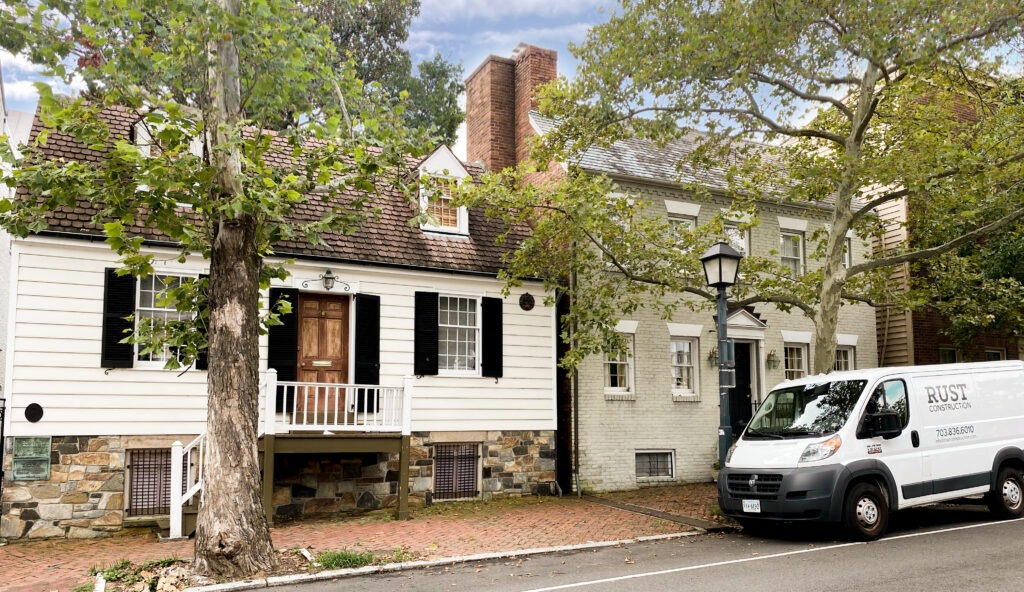
A Note on Flounder Houses
A flounder house is not an architectural style, but a local building form. The flounder house was a practical response to tight lots and property line constraints. In Alexandria Houses, 1750–1830, it is described as one of the principal dwelling types in Alexandria rather than a style category. We’ve written about the flounder house separately, but it remains one of Old Town’s most distinctive local housing forms.
Why It Matters When You Remodel
Knowing your home’s architectural character makes renovation decisions clearer. Proportions, trim profiles, window dimensions, how an addition should relate to the original structure. All of it makes more sense when you understand the design language you’re working with.
Often the goal is not to freeze a house in time rather to understand its character.
At Rust Construction, historic home renovation in Alexandria is a significant part of what we do. If you’re planning a project in Old Town, get in touch.