
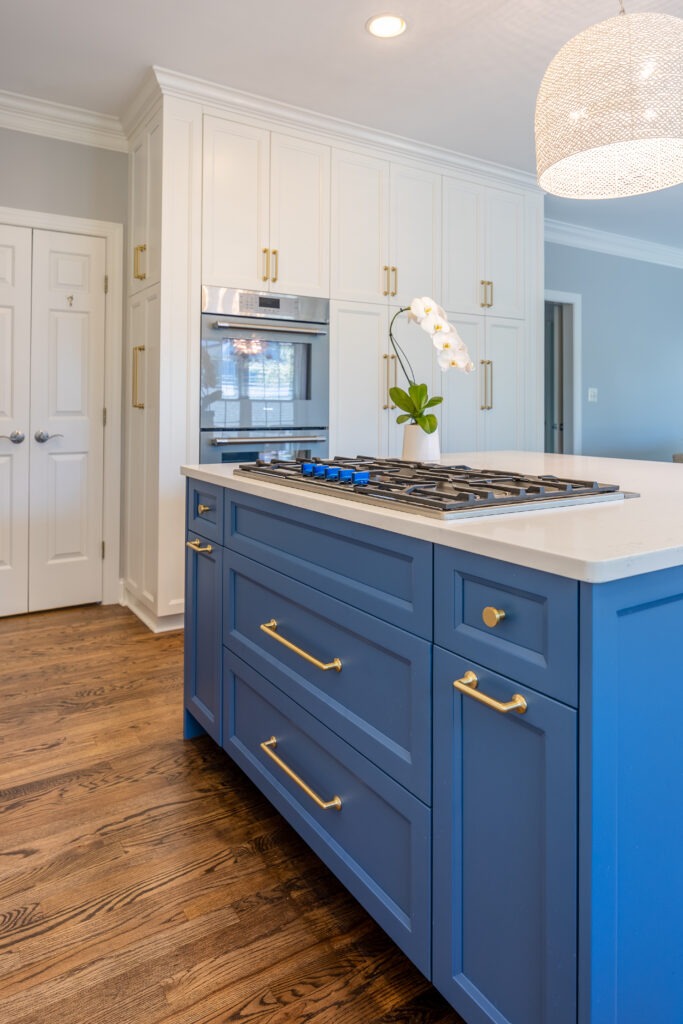
When we sit down with homeowners in Alexandria or Arlington to plan a kitchen remodel, the conversation always involves the cabinetry. On the surface it might seem like a simple question of what looks good, but the way cabinet doors are built, and how much flexibility you have in their design, affects cost, storage, timelines and long‑term durability.
Whether you’re restoring a historic Old Town rowhouse or designing a sleek contemporary kitchen, understanding the difference between inset, overlay, custom, semi‑custom and stock cabinets will help you make informed choices.
What Do We Mean by Inset and Overlay Cabinets?
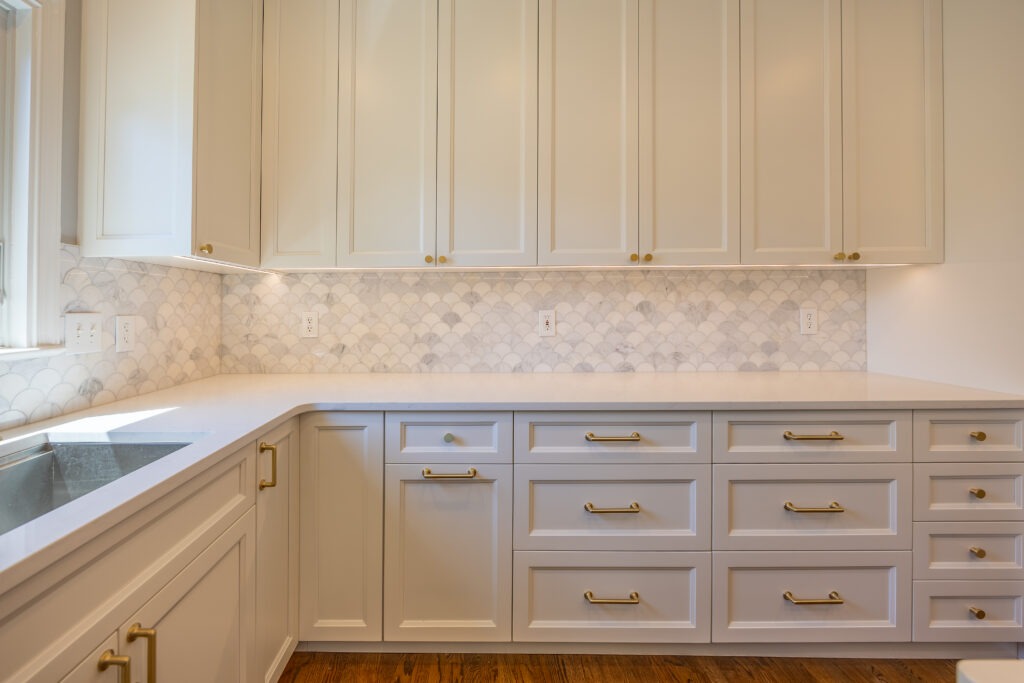
Overlay cabinets are the most common style in modern kitchens. In an overlay design the cabinet door sits on top of the face frame; a partial overlay leaves a border of the frame visible, while a full overlay “European style” covers nearly the entire face frame.
Because the doors sit outside the frame, overlays maximize interior storage and are more forgiving when walls aren’t perfectly plumb. They also tend to be more cost‑effective.
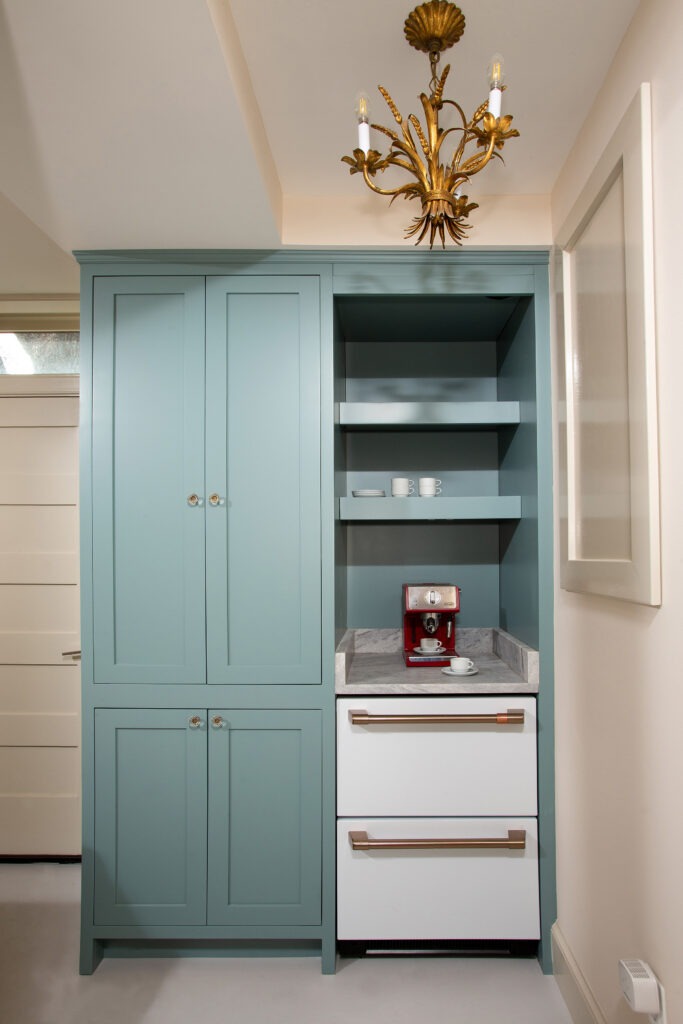
By contrast, inset cabinets hark back to early furniture‑making traditions. The doors and drawers are set inside the face frame, creating a flush surface that reads as custom craftsmanship. This precision comes at a price: inset cabinets typically cost 20–30 % more than partial overlays, require meticulous installation and sacrifice a small amount of interior space.
For many homeowners, the trade‑off is worth it. The seamless look can feel like built‑in furniture and suits both contemporary and historic homes.
Pros and Cons at a Glance
Feature |
Overlay (Partial/Full) |
Inset |
| Cost | More budget-friendly | 20–30 % higher cost |
| Storage | Maximizes interior space | Slightly less interior space |
| Installation | More forgiving | Requires precision |
| Aesthetic | Clean, modern, flexible | Flush, furniture‑like |
| Maintenance | Lower maintenance | May need hinge adjustments |
For homeowners who love the idea of inset cabinetry but worry about cost or installation, some manufacturers offer semi‑custom “inset‑look” lines that combine a flush appearance with the easier fit of full overlay.
Custom, Semi‑Custom and Stock: Levels of Personalization
Beyond door style, the cabinet industry divides products into three tiers: stock, semi‑custom and custom. The differences have more to do with flexibility and craftsmanship than with inset versus overlay.
A cabinet can be full overlay and custom. It can be inset and custom. It can also be overlay and stock. These terms describe different parts of the decision.
Inset and overlay describe how the door sits on the cabinet.
Stock, semi-custom and custom describe how much control you have over the cabinet itself.
Stock Cabinets: Ready‑Made and Budget‑Friendly
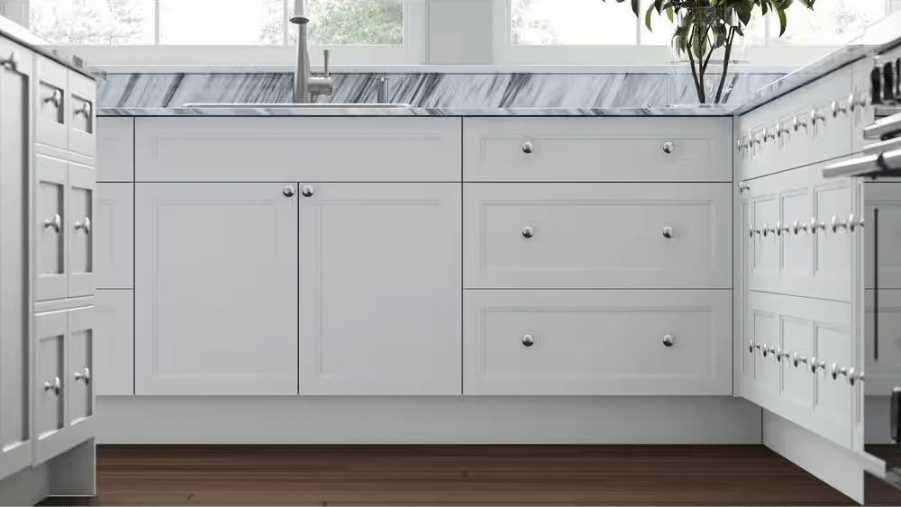
Big‑box retailers like IKEA and Home Depot carry stock units in set sizes: from 9 inches up to about 48 inches wide, built from economical materials such as melamine or plywood veneers. Because they’re mass‑produced, stock cabinets are the most affordable option and are often available for same‑day pickup.
The trade‑off is limited variety in door styles, colors and sizes, cabinet depths, interior accessories and the need to use filler strips to fit irregular spaces.
Stock works well for rental properties, utility rooms or budget‑conscious remodels where quick delivery matters. Just be aware that lower price can mean lower material quality.
For a primary kitchen in a long-term home, stock cabinetry is rarely the strongest option unless the budget or timeline requires it.
Semi‑Custom Cabinets: The Hybrid Sweet Spot
Semi‑custom cabinetry sits between stock and custom. Manufacturers start with standard cabinet boxes but allow modifications.
Depending on the line, you may be able to adjust cabinet widths, heights or depths. You may also have more choices for finishes, door styles, hardware, drawer configurations, moldings and interior storage accessories. This is where many kitchen remodels land.
Semi‑custom is ideal for standard kitchen layouts where you want to maximize storage and match your style, but don’t need a blank canvas. It offers enough variety to create a high‑end look and often includes professional installation.
The key is understanding the limits of the cabinet line before the design is finalized. Every semi-custom manufacturer has rules. Some are very flexible. Others are closer to stock with a few added options.
That is why cabinetry should be selected as part of a coordinated design-build process, not treated as an isolated product decision.
Custom Cabinets: Made to Order
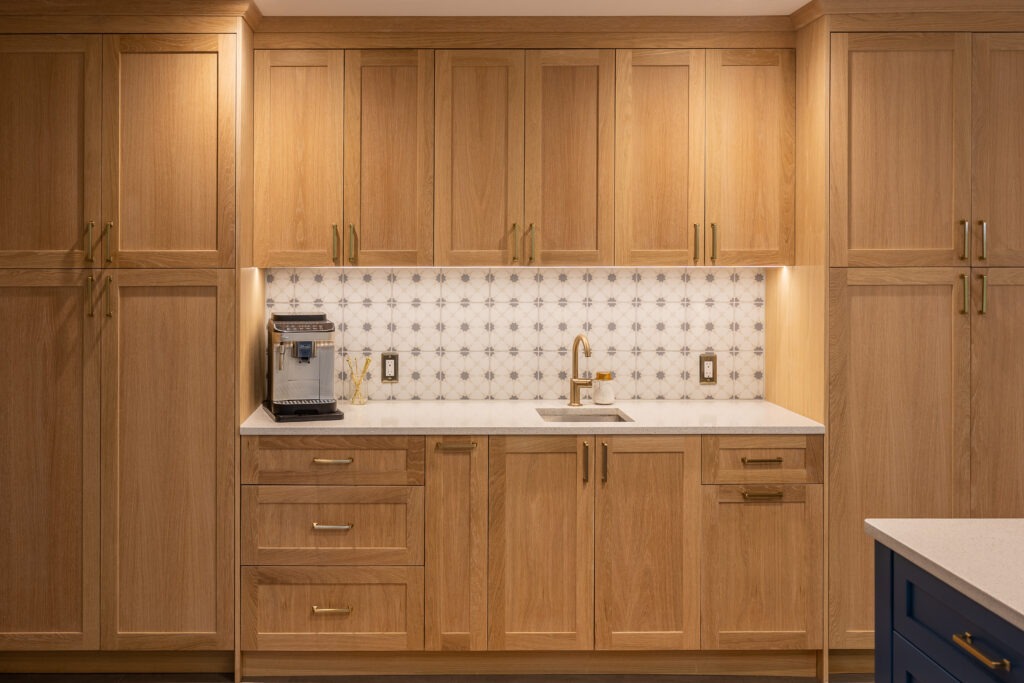
Custom cabinets are built entirely to your specifications. Every detail can be tailored to the space: dimensions, materials, finishes, door profiles, moldings, interior storage, specialty pieces and hardware.
This level of control makes custom cabinetry perfect for older homes with irregular dimensions, unique architectural features or highly specific design visions.
Custom cabinetry shines when no off‑the‑shelf solution will work: think of a 19th‑century rowhouse with uneven walls, or a modern home requiring floor‑to‑ceiling cabinetry with integrated appliances. If your design calls for unusual wood species, bespoke finishes or one‑of‑a‑kind storage solutions, full custom is the way to go.
For highly detailed cabinetry and built-in millwork, professional references like the Architectural Woodwork Institute’s casework standards help frame expectations around quality, fit, tolerances and workmanship.
Custom cabinetry makes the most sense when the design truly requires it. Otherwise, a strong semi-custom line may provide the right balance of quality, flexibility and value.
How to Choose the Right Cabinet Option
Deciding between overlay, inset, custom, semi‑custom and stock cabinets comes down to balancing budget, style, timeline and function. Here are a few guidelines we share with our clients:
-
Evaluate your space and design priorities:
If your kitchen layout is standard and you’re working within a modest budget, semi‑custom overlay cabinets can give you a tailored look without the premium price tag.
For unusually shaped rooms or historic restorations where a perfect fit is essential, or if your design calls for exact proportions, specialty storage, integrated panels or a furniture-like appearance, consider custom inset cabinetry.
The best cabinet choice is not always the most expensive one. It is the one that solves the right problems.
-
Consider long‑term value:
While stock cabinets save money up front, they may not stand the test of time if they are built with less durable materials and hardware. Semi‑custom and custom options use higher‑quality materials and can be refinished or repaired more easily. They can also support a more finished kitchen, especially when the cabinet layout needs to coordinate with appliances, lighting, countertops and trim.
Cabinetry is one of the major drivers of kitchen remodeling costs, so it should be evaluated with the rest of the project budget, not priced in isolation.
-
Think about your timeline:
If you need cabinets quickly, stock or ready‑to‑assemble overlay cabinets can be in your home within days.
Semi-custom orders usually require more lead time. Custom cabinetry can take longer still, especially when shop drawings, specialty finishes or one-off details are involved.
Waiting for the right cabinet package is often worth it, but the timeline needs to be understood early so it does not disrupt construction sequencing.
-
Match the aesthetic of your home:
Overlay cabinets pair well with contemporary or transitional designs. Full overlay, in particular, gives homeowners a clean look with efficient storage and strong value.
Inset cabinets offer a timeless, furniture‑like elegance that suits both modern and period homes.
Cabinet finish and door style should also be considered alongside countertop material selection. The two surfaces carry much of the visual weight in a kitchen, and they need to feel like they belong together.
-
Layout Matters More Than the Cabinet Label:
Homeowners often ask whether custom cabinets are worth it. The better question is whether the layout needs them.
A thoughtful layout with semi-custom cabinets can outperform a poorly planned custom kitchen. Storage should be designed around how the household actually cooks, shops, cleans, entertains and moves through the space.
The NKBA kitchen planning guidelines are a helpful reference for thinking about cabinet-centric spaces, clearances, storage, lighting and activity centers.
For homeowners, the practical version is simple: do not start with the cabinet catalog. Start with the way the kitchen needs to work.
The Right Cabinet for the Right House
Cabinets do a lot of work in a kitchen. They set the tone visually, but they also determine how the room functions every day: where things live, how easily drawers open, how much storage you actually gain, and how the kitchen holds up over time.
That is why the decision should not start with the most expensive option or the trendiest door style. It should start with the room, the budget, the timeline, and the way the household actually uses the space.
Sometimes that means full overlay cabinets. Sometimes it means inset. Sometimes a strong semi-custom line is the right answer. Other times, the room calls for fully custom cabinetry because standard sizes or standard details will force too many compromises.
At Rust Construction we’ve spent decades helping our neighbors in Alexandria, Arlington and Washington, DC select and install cabinets that respect historic architecture, suit modern lifestyles and stand up to daily use.
Planning a renovation and want guidance on cabinet options or design?
Contact Rust Construction to start the conversation. We’ll help you sort through the choices and build a kitchen that feels considered, useful, and made for the way you live.